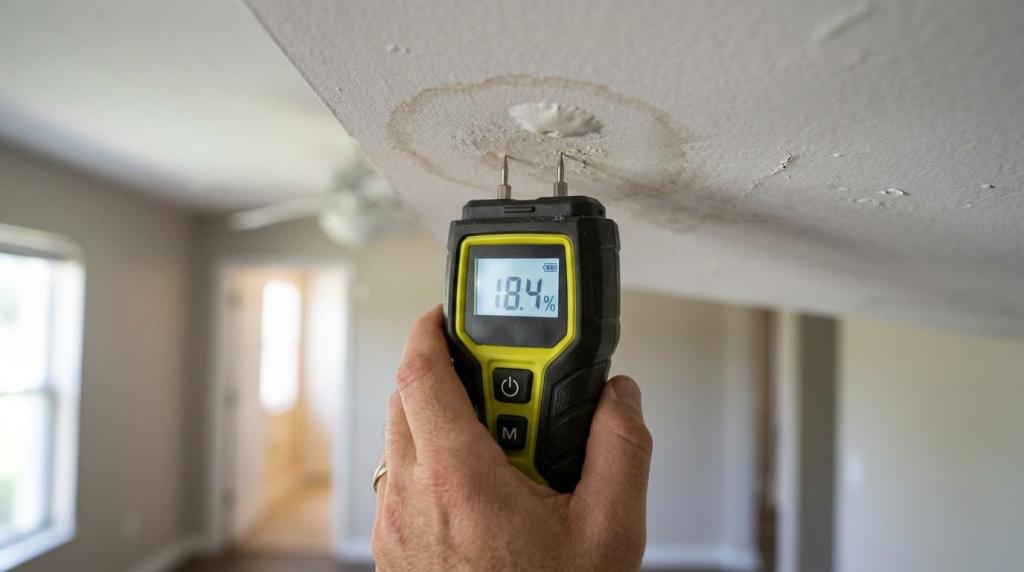
A roof leak rarely stays in one place. In Florida homes and commercial buildings, water can enter at the roof, travel along framing, soak insulation, stain drywall days later, and feed mold growth long before the source is obvious. By the time a ceiling spot appears in Tampa, Brandon, St. Petersburg, or Lakeland, moisture may already be sitting inside materials that are hard to see and even harder to dry without the right equipment.
That timing matters. Public health guidance from the EPA and CDC consistently points to a narrow drying window of about 24 to 48 hours after water intrusion. Once that window passes, wet building materials can start supporting mold growth, especially in a humid region like Tampa Bay where roof leaks often follow wind-driven rain, storm damage, clogged drainage paths, or worn flashing.
After any roof leak, quick action can limit both the repair bill and the scope of mold remediation.
- Roof leaks can trigger mold fast: Wet drywall, insulation, wood, and ceiling materials may begin supporting mold growth within 24 to 48 hours if they are not dried quickly.
- Hidden moisture is the real problem: Water often moves behind walls, above ceilings, and through attic insulation before visible damage appears.
- Florida conditions raise the risk: High humidity in Tampa Bay can keep materials damp longer, which gives mold a better chance to spread.
- Not all black mold is toxic: Dark-colored mold should be taken seriously, but color alone does not identify the species or tell you whether it is toxic.
- Mold remediation and water damage clean-up should happen together: Fixing the moisture source, drying the structure, removing contaminated materials, and cleaning the affected area all matter.
Why roof leaks in Florida lead to hidden mold quickly
Florida roofs take a lot of abuse. Summer storms, heavy rain, tropical weather, and long humid seasons create ideal conditions for water intrusion. A small opening around flashing, vents, valleys, skylights, or damaged shingles can allow repeated moisture entry without a dramatic active drip inside the living space.
That is why roof leak mold is often discovered late. Water may first collect in attic insulation, roof decking, or the backside of ceiling drywall. It can then move along rafters and framing until gravity carries it to a completely different room. Homeowners often notice a musty odor, an AC performance change, or a faint stain before they ever see active dripping.
The EPA advises drying wet or damp materials within 24 to 48 hours to prevent mold growth in most cases. The CDC gives similar guidance after flood or water events. In real buildings, that means the clock starts when the material gets wet, not when the stain becomes visible.
Across Hillsborough, Pinellas, Pasco, Polk, and Hernando Counties, this pattern shows up often after roof leaks in:
- Tampa and Brandon
- Riverview and Apollo Beach
- St. Petersburg, Clearwater, Largo, and Palm Harbor
- Wesley Chapel, Land O’ Lakes, Holiday, New Port Richey, and Port Richey
- Lakeland and Spring Hill
How roof leak moisture travels through a building
A roof leak is rarely a straight vertical drip. Water follows the path of least resistance, and building assemblies give it plenty of options. It can wick through insulation, spread across wood sheathing, run down trusses, and collect above soffits or inside wall cavities.
That hidden travel is one reason mold remediation often involves more than the ceiling stain you can see. If wet insulation sat above a room for several days, the contamination may extend well beyond the visible mark. The same applies to HVAC-related spread. If moisture affects attic ductwork or nearby ventilation components, the odor can circulate into living areas even when the mold source stays out of sight.
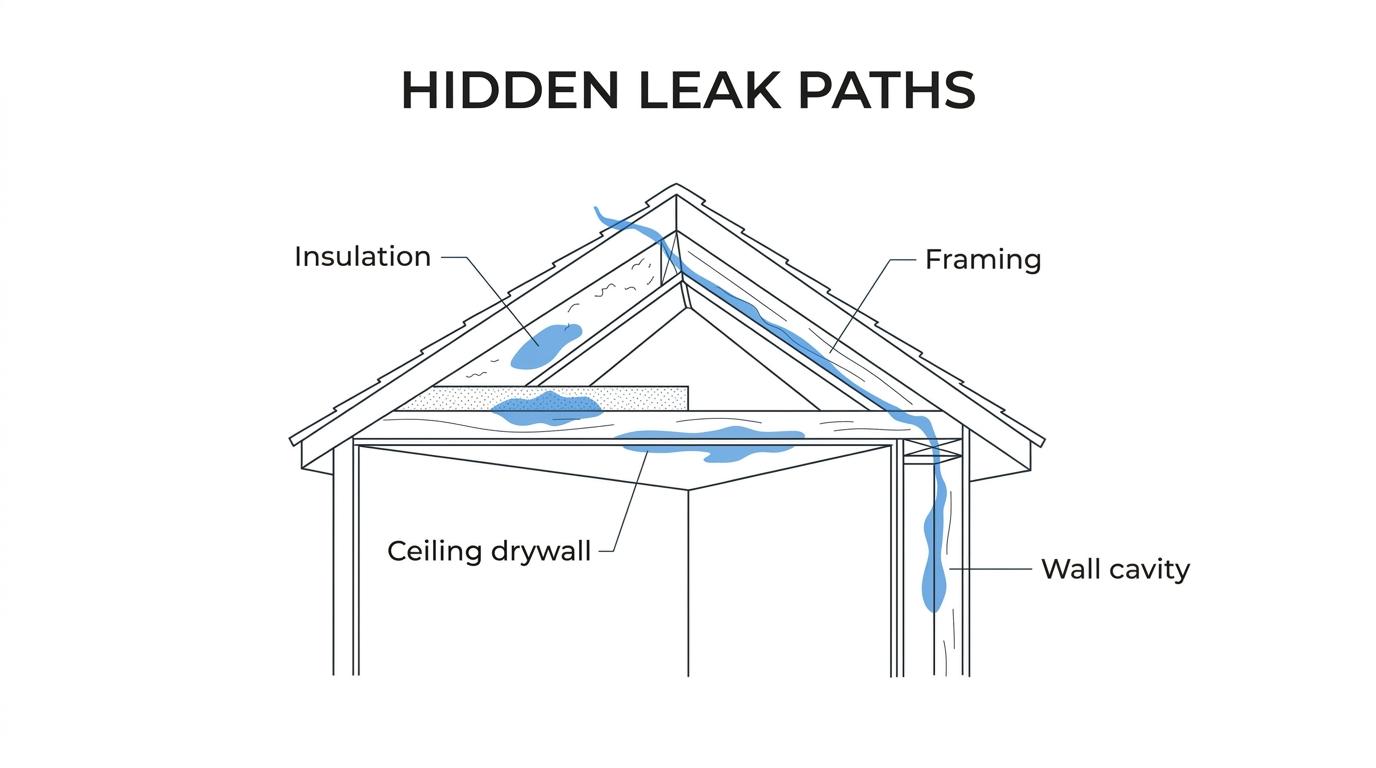
The table below shows common roof leak paths and what they often lead to indoors.
| Roof leak path | Where moisture ends up | What may happen next |
|---|---|---|
| Damaged shingles or underlayment | Roof decking, attic insulation | Musty odor, mold on wood or insulation |
| Failed flashing around vents or chimneys | Framing, ceiling drywall | Brown stains, bubbling paint, hidden mold behind drywall |
| Clogged roof drainage or ponding | Sheathing, fascia, soffits | Rot, damp attic air, recurring mold |
| Storm-driven rain at roof penetrations | Wall cavities, top plates | Mold inside walls before surface damage appears |
| Long-term slow leak | Multiple connected materials | Larger remediation area and more material removal |
Signs of mold from a roof leak that Tampa Bay owners should not ignore
Roof leak mold is not always dramatic. In many homes, the earliest signs seem minor or easy to dismiss. A faint odor after rain, a ceiling texture change, or a persistent damp feeling in one room can all point to trapped moisture.
Color can be misleading, too. Mold can appear black, green, gray, brown, or white depending on the material and moisture conditions. A dark patch near a leak should never be ignored, but it should also not lead to assumptions about toxicity based on color alone.
Common warning signs include:
- Musty odor after rain
- Ceiling stains or rings
- Peeling paint or bubbling texture
- Soft drywall
- Warped baseboards
- Increased allergy-like symptoms indoors
- Damp attic insulation
- Condensation or moisture around vents
Why black mold after a roof leak is often misunderstood
Many property owners hear “black mold” and assume the worst. The better approach is more precise. Not all black-colored mold is toxic, and not every toxic mold appears black. Color alone does not identify the species, the extent of contamination, or the level of exposure risk.
Still, any mold growth linked to a roof leak deserves prompt attention because the real issue is ongoing moisture and colonization inside porous materials. If drywall, insulation, ceiling tiles, or wood stay wet long enough, mold can spread whether it looks dark, light, fuzzy, flat, or dusty.
This is where professional mold remediation has value beyond basic cleaning. Wiping a visible patch with household cleaner does not address wet insulation above it, moisture inside framing, or spores released during disturbance. A proper response focuses on the source, the moisture load, the affected materials, and the containment needed to keep the issue from spreading during removal.
Why mold remediation and water damage clean-up should happen together
Treating mold without treating the water problem usually leads to repeat growth. The leak source must be corrected, the wet materials must be dried or removed, and the affected area must be cleaned using a method that fits the type and scale of contamination.
In Tampa Bay, this often means pairing roof leak response with water and flood damage clean-up services. Even when the event was “just a leak,” the building still experienced water intrusion. Moisture mapping, drying equipment, demolition of unsalvageable materials, odor control, and post-remediation cleaning may all be part of the job.
A strong response typically includes two connected phases:
- Water damage clean-up: Stop the intrusion, inspect the spread, remove standing water if present, dry structural materials, and document the affected areas.
- Mold remediation and removal: Contain the work zone, remove contaminated porous materials when needed, clean salvageable surfaces, and address residual odor or air quality concerns.
For residential and commercial properties in Tampa, Clearwater, Wesley Chapel, or Spring Hill, speed changes outcomes. FEMA guidance also supports removing damaged materials that could not be dried within 24 to 48 hours. That is especially relevant for insulation, ceiling tiles, and saturated drywall after a prolonged roof leak.
What professional roof leak mold response looks like in Tampa Bay
Every building is different, but the process should be methodical. The first task is identifying where water entered and where it traveled. In many cases, the wettest area is not directly below the roof defect. Moisture meters, thermal imaging, attic inspection, and targeted opening of suspicious cavities can reveal the true scope.
Then comes drying and material decisions. Some surfaces can be cleaned and dried. Others, especially porous materials that stayed wet too long, may need removal. In a humid region, drying also has to account for ambient moisture so that materials do not remain damp after the obvious water is gone.
A local team like Tampa Bay Mold & Flood typically focuses on the whole chain of damage, not just the visible mold. That includes mold remediation and removal, water and flood damage clean-up, air purification, odor removal, and support with insurance claims when appropriate. For owners across Hillsborough, Pinellas, Pasco, Polk, and Hernando Counties, 24/7 emergency response and fast in-home evaluation can make a major difference when a leak is recent.
Some service details matter because they affect trust and consistency during a stressful situation:
- Licensed and insured in Florida: Useful when the work involves regulated mold remediation and structural drying concerns.
- Owner on every job site: A practical way to maintain oversight and communication.
- Free in-home estimates: Helpful when owners need a fast local opinion before damage spreads.
- Five-year workmanship guarantee: A sign that the remediation work is meant to last.
Roof leak mold risks in attics, ceilings, and HVAC areas
Attics are a common starting point because they are hot, humid, and easy to ignore. After a roof leak, insulation can hold moisture even when the top layer feels dry. Wood framing and roof decking may then support hidden fungal growth with very little visual warning from the room below.
Ceilings create another challenge. Water can pool above painted drywall, slowly weakening the paper facing and joint compound. A stain that appears small on the room side may represent a larger wet zone on the hidden side.
HVAC systems also deserve attention. EPA guidance notes that moisture can collect in ventilation systems due to drainage and humidity issues. If a roof leak affects attic ducts, nearby air handlers, or vent penetrations, the odor and moisture impact can feel wider than the original leak area.
FAQ about mold from roof leaks in Tampa Bay
How fast can mold grow after a roof leak?
Mold risk can rise within 24 to 48 hours if wet materials are not dried quickly. That timeline is consistent with EPA and CDC guidance on water-damaged materials.
Can a small roof leak really cause a major mold problem?
Yes. A slow leak can be worse than a dramatic one because it may continue for weeks inside insulation, wood, or drywall before anyone notices. Repeated dampness gives mold more time to spread.
Is black mold from a roof leak always toxic?
No. Not all black mold is toxic, and color alone does not identify the species. Any dark mold should still be inspected because it signals a moisture problem and may require professional removal.
Do I need mold remediation if I only see a ceiling stain?
Maybe. A stain only shows where moisture became visible. The actual wet area may extend into the attic, insulation, framing, or wall cavities. Inspection helps determine whether drying alone is enough or whether remediation is needed.
Should wet drywall be removed after a roof leak?
If drywall dried fully within the 24 to 48 hour window and did not develop mold, it may be salvageable. If it remained wet too long, softened, or shows contamination, removal is often the safer choice.
What areas around Tampa Bay are commonly served for roof leak mold issues?
Service is commonly needed across Tampa, Brandon, Riverview, Apollo Beach, St. Petersburg, Clearwater, Largo, Palm Harbor, Wesley Chapel, Land O’ Lakes, Holiday, New Port Richey, Port Richey, Lakeland, and Spring Hill, along with the surrounding areas in Hillsborough, Pinellas, Pasco, Polk, and Hernando Counties.
What should I do first after finding mold from a roof leak?
Stop the water source if possible, avoid disturbing the mold, and get the wet area assessed quickly. Fast water damage clean-up and mold remediation can limit spread, protect indoor air quality, and reduce how much material has to be removed.
When roof leaks and indoor mold show up together, quick local action matters. For property owners across greater Tampa Bay, the best results usually come from treating the moisture problem and the contamination at the same time, before hidden damage turns into a much larger restoration project.